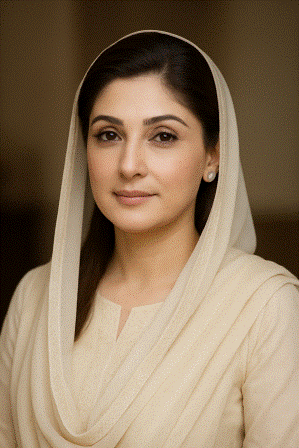
Punjab Chief Minister visits Maryam Nawaz Center of Excellence for Special Education Students in Shalimar Town, Lahore
Marrium Nawaz is a Visionary Leader of Punjab
Punjab is considered the heartbeat of the nation, being the most populous and economically significant province in Pakistan. It contributes greatly to the overall development of Pakistan, pertaining to agriculture, industry, culture, and education. However, this is a region plagued by unresolved deep rooted socio economic disparities, retarded rural development, inadequate infrastructure, and an ever increasing population burden.
These challenges notwithstanding, Marium Nawaz has emerged as a force of transformation for Punjab. Her leadership depicts a blend of astute political acumen combined with a highly progressive vision and staunch commitment towards the welfare of the common man. She thus places Punjab on the trajectory of inclusive and sustainable development by addressing infrastructure, education, healthcare, agriculture, women’s empowerment, and digital governance.
Education, and Political Journey
She was born into one of the most influential political families in Pakistan, an upbringing that first introduced her to governance and public service early in life. She pursued her education both domestically and internationally, gaining a deep understanding of social, economic, and political issues.
Her political sojourn started with grassroots engagement, where she focused on the needs of the marginalized communities in Punjab. She rose through the ranks over the years by combining strategic thinking with on ground action. Her empathy, diligence, and innovative approach firmed up the trust of citizens and colleagues alike, thus winning her the office of Chief Minister.
She had a vision from the very outset for bringing about equilibrium in the urban-rural development divide, uplifting the underprivileged sections of society, and transforming the entire Punjab into a modern, competitive, and inclusive region.
Vision for Punjab
She has outlined a three pronged vision centered on.
1. Economic Development: This encompasses strengthening the economy of Punjab through industrial growth, modern agriculture, generating employment opportunities, and attracting domestic and foreign investment.
2. Social Welfare: Improved health, education, and social service systems to guarantee the best quality of life for all people.
3. Sustainable Governance: Ensuring transparency, accountability, and the participation of citizens in government operations for building trust and efficiency.
Infrastructure and Urban Development
Marium Nawaz believes that strong infrastructure is the backbone of economic growth. Her administration launched a number of initiatives in urban and rural areas to enhance connectivity and bring about modernization to cities.
• Roads and Highways: Major projects such as the expansion of the Lahore-Islamabad Motorway, Faisalabad Khanewal Expressway, and rural road development programs have increased connectivity and decreased travel times. Significant enhancement in road networks is being observed in districts like Sargodha, Multan, and Bahawalpur, improving trade and mobility.
• Public Transportation: Modern bus rapid transit systems and eco friendly transport solutions in Lahore, Multan, and Rawalpindi have reduced congestion and pollution.
• Smart Cities: The Lahore Smart City, together with the digital governance centers in other districts, promises efficient urban management, enhanced public services, and real time monitoring of city systems.
Education Reforms
According to Marium Nawaz, education is the foundation of long term growth in Punjab. Access and quality of education are two main areas that her reforms target, specifically in underdeveloped districts.
• District wise Programs: Schools in Rahim Yar Khan, Muzaffargarh, and Dera Ghazi Khan have been upgraded with modern facilities, including libraries and laboratories.
• Girls’ Education: Scholarships, free textbooks, and school transport facilities have been introduced to increase female enrolment.
• Technical Vocational Trainings: Faisalabad and Sialkot centers provide training to the youth for skill development, which prepares them for employment in manufacturing, IT, and services.
Healthcare Transformation
Healthcare has been one of the priorities under Mariam Nawaz’s rule. She took steps to ensure quality medical treatment in both urban and rural areas.
New Hospitals and Clinics: Facilities for healthcare have been extended or renovated in districts like Rajanpur, Lodhran, and Bhakkar in rural areas, while hospitals in Lahore, Multan, and Faisalabad have been extended with more specialized departments.
Maternal and Child Health: Programs focused on prenatal care, vaccinations, and nutrition has been initiated to lower mortality rates for mothers and infants.
• Telemedicine: The digital health initiatives connect rural patients to urban specialists and provide them with quality medical advice.
Women’s Empowerment and Social Initiatives
Mariam Nawaz is a strong advocate of empowering women, believing that the latter’s active participation would make much required development possible in the province.
Entrepreneurship Programs: Microfinance schemes and business incubators support women-led startups in Lahore, Faisalabad, and Multan.
•Skill Development: Training centers provide skills for women in IT, textiles, and handicrafts.
• Representation in Governance: Policies encourage women’s participation in local councils and public offices.
Agriculture and Rural Development
Agriculture is the backbone of the Punjab economy, and Marium Nawaz has focused on modernizing this sector to ensure the prosperity of farmers.
Modern Techniques: Introduction of high-yield crop varieties, drip irrigation, and greenhouse farming in Faisalabad, Sargodha, and Bahawalnagar districts.
• Financial Support: Subsidies and loans are granted to the small farmers for adopting modern equipment and techniques.
• Rural Infrastructure: Development projects enhance water supply, sanitation as well as rural roads.
Digital Governance and Transparency
For effective governance, Marium Nawaz has prioritized digitization and transparency:
. E-Governance Platforms: Online government services include registration, certificates, and complaint systems that are easily accessible by citizens.
• Transparency Initiatives: Budget tracking and public disclosure of development projects ensure accountability.
• Citizen Engagement: Through online portals, citizens can suggest improvements and report grievances.
Achievements and Impact
The leadership of Marium Nawaz has brought about tangible improvements across Punjab:
• Economic Growth: Industrial production has risen along with foreign investment concentrated in Sialkot, Faisalabad, and Lahore.
• Education: Increased literacy rates, higher enrollment of girls into secondary education.
• Health: Death rates during childbirth and early infancy have reduced; rural healthcare access has increased.
• Social Equality: Women’s involvement in business, governance, and the labor market has increased.
Comparisons with past administrations bring out her focus on inclusive and data-driven development in ensuring that resources reach the most marginalized populations.
Challenges and Future Strategy
Despite improvements, Punjab still confronts some of the following challenges:
• Climate Change: Water scarcity and extreme weather affect agriculture.
• Urbanization: Rapid growth of cities demands modern urban planning with available and affordable housing facilities.
• Job Creation: Entrepreneurial and skill development activities should be expanded with a view to overcoming unemployment.
• Sustainable Development: Continuous investment in renewable energy, digital governance, and social welfare is of essence.
Marium Nawaz’s strategies include climate resilient agriculture, smart urban planning, skill based employment programs, and strengthened governance frameworks.
Mariam Nawaz’s Leadership
A visionary, Marium Nawaz shows empathy and leads through action. Her steps change lives, empower people, and inspire citizens. Prioritizing education, healthcare, infrastructure, women’s empowerment, and digital governance, she worked for the equipping of Punjab towards inclusive and sustainable development.
Her commitment has become a model for future leaders whereby progressive policies and good governance can, in fact, surmount systemic challenges and bring about lasting change.
Marium Nawaz has redefined governance in Punjab. Her inclusive development, modernization, and policies centered on the citizens ensure that progress reaches every nook and corner of the province. From rural villages to urban centers, Punjab is transforming under her leadership.
Her story shows that this is indeed true: with vision, determination, and empathy, a brighter and more prosperous tomorrow can be created. Punjab, under Marium Nawaz, is not just developing, it is thriving a beacon of what good governance can achieve.
About the Author