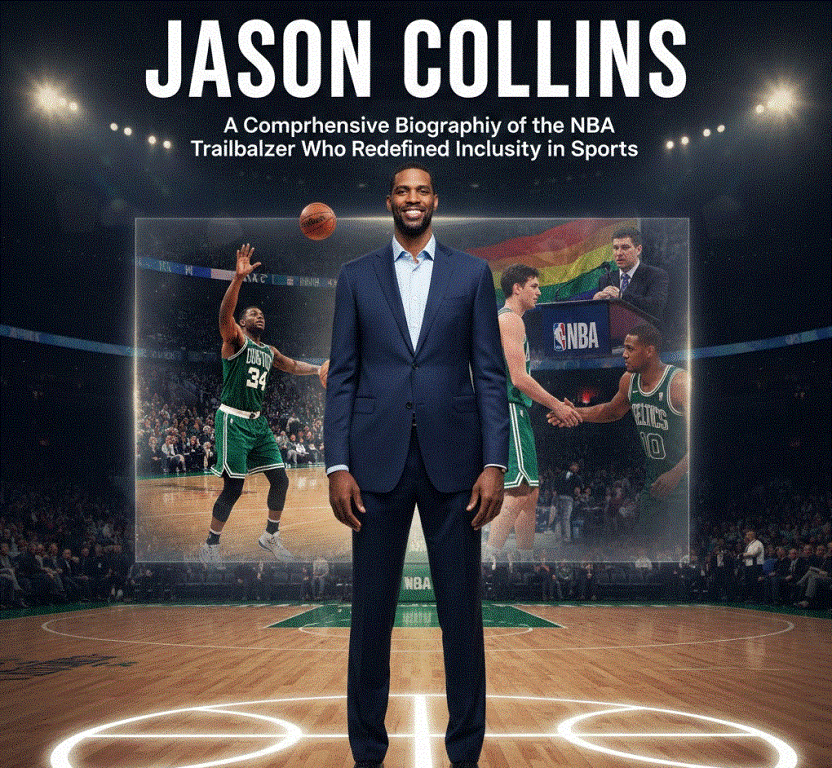
Jason Collins is a name forever enshrined in the history of professional sports, not only for his commanding presence on the basketball court but also for the monumental role he played in transforming cultural norms around identity, inclusion, and representation within the sport. Born Jason Paul Collins on December 2, 1978, in Los Angeles, California, he rose from promising young athlete to respected NBA veteran during his thirteen season career. Yet beyond his defensive skills and team leadership, Collins is best known for being the first openly gay athlete to play in any of the four major American sports leagues NBA, NFL, MLB, and NHL while being signed with any of them. His coming out announcement in 2013 marked a pivotal moment in the story of sports, turning him into a world icon of courage, representation, and progress. Today, Jason Collins is known not only for his contributions to basketball but for his continuing advocacy in the field of LGBTQ rights, diversity, and mental well being in competitive sports.
Jason Collins and his identical twin brother, Jarron, grew up in suburban Los Angeles and found basketball early in their childhood. The twins developed an inseparable bond, enabling each other both physically and mentally as they had to navigate sports at such a high level of competition. Both brothers stood over seven feet tall and became some of the best athletes during their high school days, which quickly made them popular names among college scouts from all over the nation. Jason’s natural gift for defense, shot blocking, and on court intelligence made him one of the most sought after recruits; thus, he chose Stanford University. Collins became a physical freak of a center and one of the many athletic distinctions while at Stanford. His presence on defense, team leadership, and physical endurance made him one of the most consistent big men during the late 1990s and early 2000s. Along with Jarron, Jason helped lead Stanford to multiple NCAA tournament appearances and assured himself as one of the most reliable defensive centers.
Jason Collins was picked 33rd overall in the 2001 NBA Draft by the Houston Rockets, but his rights were dealt almost immediately to the New Jersey Nets, in whose jersey his professional career was going to gain momentum. The early 2000s were a defining period for the Nets as Collins played a huge role in the team’s back to back NBA Finals appearances in 2002 and 2003. Collins was never recognized as a high scorer, but his mastery on defense, physical toughness, and the ability to guard the best post players gave the Nets an edge. He was always ready to take charges, set hard screens, and perform disciplined defensive rotations that made him one of the most important teammates anyone could have asked for. For more than a decade, he went on to play for several NBA teams such as the Memphis Grizzlies, Minnesota Timberwolves, Atlanta Hawks, Boston Celtics, and Washington Wizards, earning a reputation across the league as a respected veteran who uplifts morale and strategy.
Privately struggling with his identity throughout his NBA career, Jason Collins is professionally very successful. Living in an environment where masculinity and perception often reign supreme, Collins felt compelled to hide his sexuality out of fear of backlash, misunderstanding, or career altering consequences. He silently carried this emotional weight for many years, performing at the highest level while experiencing an incredibly personal internal conflict. In April 2013, Collins made the courageous decision to publicly come out as gay through a cover story published in Sports Illustrated. Instantly, the moment in history captured worldwide attention. Collins wrote with honesty and vulnerability, explaining why he could no longer live in secrecy and how he hoped his story would inspire others facing similar isolation. His announcement made him the first active player in major U.S. men’s professional sports to come out publicly, breaking barriers and challenging long held stigmas.
The reaction of his coming out was invariably positive: other athletes, political leaders, public figures, and fans worldwide hailed his bravery and embraced his openness. Even former President Barack Obama went so far as to call Collins personally to congratulate him on his courage and leadership. His announcement also helped shine a light on more far reaching conversations about inclusion, diversity, and mental health in sports. Yet Collins’ journey did not stop with his public declaration. In 2014, after signing a ten day contract with the Brooklyn Nets (a return, essentially, to the franchise where Collins first began his career), Collins became the first openly gay athlete to take the court in an NBA game. He wore the jersey number 98 in honor of Matthew Shepard, a young gay man whose tragic death in 1998 became a catalyst for national hate crime legislation. The symbolic gesture resonated deeply within LGBTQ communities and further solidified Collins’ legacy as a pioneer for equality in professional sports.

Jason Collins retired
Although Collins retired from professional basketball in 2014, his impact has only increased. Today, he is one of the most outspoken advocates for LGBTQ rights, diversity, inclusion, and equality. He has worked with many organizations that foster safe and supportive environments for LGBTQ youth, including the Human Rights Campaign. Collins travels worldwide, speaking at universities, corporate events, sports conferences, and leadership summits about the value of representation, the human impact of inclusion, and the challenges at every level that LGBTQ athletes face. His unique perspective, framed by years of professional experience and personal resilience, continues to inspire others who struggle with self acceptance and fear rejection in their personal and professional lives. Jason Collins’s life is not all about basketball and activism. He has been on television interviews, documentaries, and panel discussions where he shares his journey in the NBA, pressures of living closeted within sports, and deep empowerment derived from authenticity. Collins is also a powerful voice regarding conversations about mental wellness among athletes, the need for emotional support, open dialogue, and community resources. He reminds each audience that visibility saves lives, representation sparks hope, and inclusion strengthens teams, worksites, and society in its totality. His continued efforts have earned him numerous awards and honors from civil rights groups, sports organizations, and educational institutions who recognize lasting impacts he’s made on cultural progress. On the hardwood, Collins will always be remembered for his disciplined defense, team first mentality, and ability to carry out coaching strategies with precision. His career stands as a reminder that success in sports isn’t defined by scoring or flashy performances but, instead, by dedication and consistency and the ability to accept key roles that teams need to be ultimately successful. Through the years, many of his teammates and coaches across the league have praised Collins for his leadership, professionalism, and loyal nature qualities making him a stalwart in every locker room he joined. Younger players often credited Collins with helping them adjust to the demands of the NBA, while coaches admired his understanding of game mechanics and his ability to read opponents’ strategies. Yet, in the end, Collins’s legacy goes way beyond the game of basketball. His bravery to be himself essentially changed the landscape of professional sports. When public conversations around identity were far fewer and between, Collins opened the door, allowing scores after him to come forward and be proud, unashamedly themselves. His coming out spurred teams, leagues, and fan bases onto tolerance, respect, and basic humanity. Today, so many athletes easy, current, and future look to Jason Collins as one who made their journeys less scary and more accepted. Living his truth, he will have forever changed the narrative of what it means to be an athlete: strong in ability, yes, but strong in authenticity, too. Jason Collins remains an abiding symbol of resilience, leadership, and social progress. His career showed the world the dynamics of teaming up and trying hard to achieve success, while his personal journey brought into view the need for inclusion and compassion in competitive sports and society. He continues using his platform today to lift others up, fight for equality, and urge athletes to pursue greatness with no compromise of identity. His impact will be felt far beyond the basketball floor, playing out across generations in a continuing conversation of acceptance, representation, and human dignity. Jason Collins is more than just an NBA veteran he is a trailblazer whose courage continues to reshape the future of sports and redefine what it means to be truly fearless.
About the Author