The Abandons Review, A Stylish but Flawed Western on Netflix
The Abandons comes to Netflix with an ambitious vision: to reimaging the Western genre through a more contemporary sensibility, and while its premise radiates promise centered around two powerful, opposing matriarchs navigating the violent, morally frayed landscape of 1854 Washington Territory the execution wavers unevenly between stylized grit and melodramatic excess, thereby leaving critics and audiences divided about whether this series is a bold reinvention or simply an overblown pastiche. Families and factions vie for power, justice, and survival in frontier environs as unforgiving as they are mythic, and in this regard, the series lays out a clear narrative ambition: to explore the spiritual, emotional, and physical cost of forging a life in a land defined by lawlessness and ambition. Production is undeniably one of the show’s strongest assets every frame is drenched in mood from the dusty earth tones streaked with smoke and blood to the sharp contrasts of candlelit interiors where whispered alliances and threats unfold with theatrical flair and this commitment to aesthetic world building contributes to a haunting sense of place that lingers even when the story falters. The performances of Gillian Anderson and Lena Headey two actors well versed in playing formidable, morally complex women deepen the appeal further.
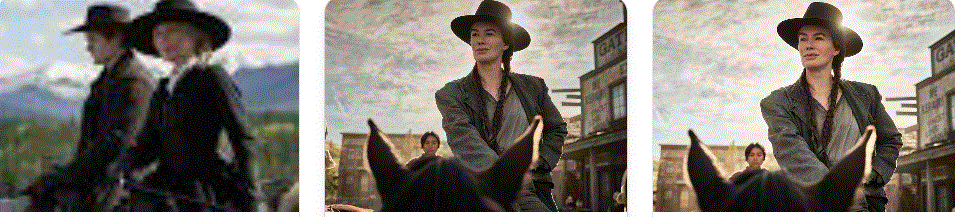
They dominate the screen with an intensity that oscillates between controlled rage and icy calculation, offering the kind of character presence the Western genre has historically reserved for men. Yet even as the show wants to give pride of place to its female leads, such interest isn’t quite enough to compensate for the issues undercutting its narrative cohesion: the writing is heavy on the clichés, including predictable vengeance, faith, and destiny monologues, and the dialogue too often tends toward the overly theatrical as if the characters are performing for an audience rather than speaking with one another within a lived in world. This theatricality feeds into a broader tonal inconsistency one moment the show strives for gritty realism reminiscent of Deadwood or 1883, and the next it slips into soap opera territory, amplifying emotions and twists to such a degree that the tension becomes less gripping and more distractingly operatic. Supporting characters suffer the most from the uneven writing; many lack the depth or internal conflict necessary to make their motivations resonate, resulting in a cast of figures who feel like archetypes brutish ranchers, corrupt lawmen, earnest settlers, conniving rivals rather than individuals shaped by their environment. This lack of nuance weakens the show’s broader themes, particularly its exploration of power: while the narrative gestures toward questions about land ownership, colonial expansion, class hierarchy, and the brutal logic of frontier justice, these themes are often stated rather than embodied, leaving the political and moral layers feeling superficial when they could have been the beating heart of the story. Despite these shortcomings, The Abandons does find moments of genuine emotional intensity scenes where characters confront loss, betrayal, or a sudden violent shift in fortune and in those moments the show reveals glimpses of the profound Western tragedy it wants to be. The musical score, heavy with mournful strings and ghostly echo, contributes to this mood, underscoring the series’ preoccupation with grief, isolation, and the fragile hope of redemption. Still, the pacing issues are hard to ignore: certain narrative threads are rushed with little setup, while others drag on without deepening the viewer’s understanding of the stakes or characters, creating a rhythm that feels disjointed and prevents the story from building sustained momentum.
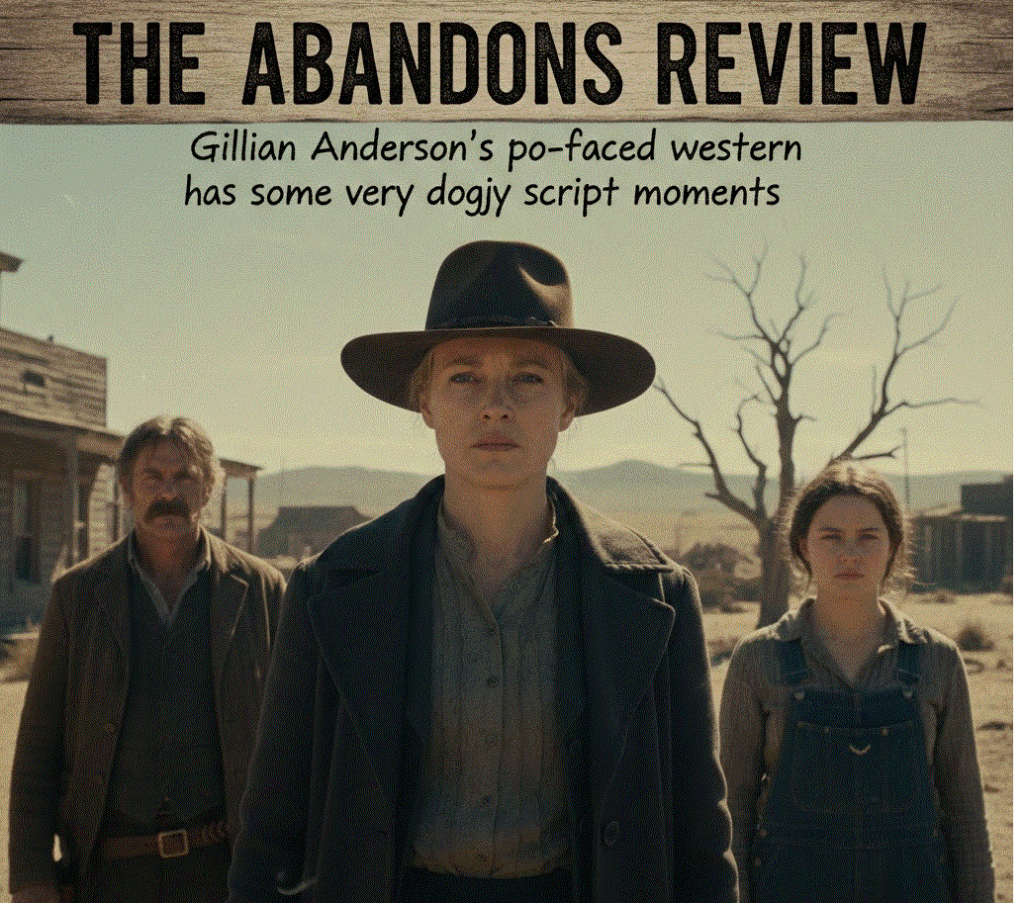
For viewers who appreciate stylized drama, heightened performances, and the spectacle of frontier conflict, these flaws may not outweigh the show’s visceral appeal after all, there is something undeniably captivating about watching two fiercely determined women carve out their legacies in a brutal world designed to crush them but for those seeking narrative precision, grounded emotional development, or thematic sophistication, The Abandons may feel like a missed opportunity, a show that mistakes scale for substance and intensity for depth. Ultimately, The Abandons stands as an intriguing but inconsistent entry into the modern Western revival: visually compelling, conceptually ambitious, and occasionally thrilling, yet hampered by heavy handed writing, uneven characterization, and a tonal imbalance that leaves it straddling the line between prestige drama and pulpy spectacle. Whether it earns a devoted fan base or fades amid stronger genre competitors will likely depend on how much viewers value atmosphere and star power over narrative refinement, but regardless of its flaws, the series contributes something memorable to the contemporary Western landscape an earnest, sometimes unwieldy attempt to rewrite frontier history through a lens of female power, moral ambiguity, and the restless, violent spirit of a nation still forging its identity in the shadows of land, blood, and ambition.
About the Author