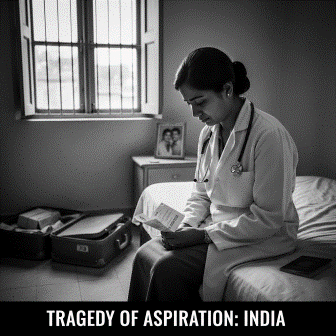
A woman doctor committed suicide after her U S visa was rejected in India.
In the Indian state of Andhra Pradesh a 38 year old female doctor reportedly commit suicide after her U.S. visa application was rejected, according to Indian media. The police have confirmed the incident. The doctor, identified as Rohini, was found dead when her family knocked on her door and received no response; they broke it open to find her inside.
According to media reports, she apparently attempted suicide by taking a large number of sleeping pills, or by injecting herself. The exact cause of death will be determined after a post mortem report. The authorities found a suicide note in her home. In the note, she mentioned being depressed and explicitly referred to the visa rejection of USA.
Mother of Rohini told that her daughter had been a very intelligent student. She completed her MBBS in Kyrgyzstan between 2005 and 2010 and had an outstanding academic record. She had big dreams for her future and Settled in USA for job.
However, after her visa was rejected, she became deeply disheartened and suicide after her U.S. visa application was rejected
Short Review Why these type Incidents Happen
- High Expectations and Pressure: Many professionals, especially in fields like medicine, have very high aspirations. A visa to the U.S. may represent not just better income but validation of their talents and dreams. When such hopes are dashed, the emotional toll can be severe.
- Mental Health Stigma: In many societies, mental health issues such as depression may not be openly discussed or adequately supported.
- Immigration Stress: Applying for a visa is a stressful, uncertain process. Rejection can be deeply personal, especially if someone is planning their entire future around moving abroad.
- Lack of Support Systems: Even though she had a well educated background, there may have been insufficient emotional or psychological support after visa rejection. Families, communities, or workplaces sometimes do not provide the kind of help needed in such crises.
- Financial and Career Pressures: For many professionals, working abroad is tied to economic security.
About the Author