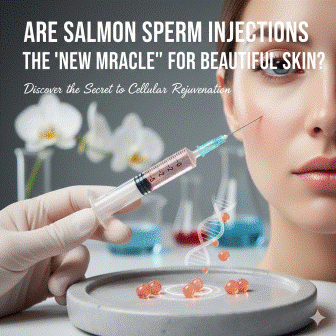
: Are Salmon Sperm Injections the “New Miracle” for Beautiful Skin?
In recent years, the beauty and skincare industry has seen the availability of more and more imaginative treatments, from advanced lasers to injectable therapies aimed at restoring youth to the skin and slowing the signs of aging. Of these, perhaps one of the most unlikely treatments is salmon sperm injections, otherwise known as poly deoxy ribo nucleotide, or PDRN, therapy. While the words “salmon sperm” might sound shocking or even weird, the science behind this is well studied and increasingly put into practice in dermatology and aesthetic clinics. The notion here is that DNA fragments originating from salmon sperm could boost skin repair, improve collagen production, elasticity, and hence restore a youthful glow. The treatment has been widely discussed on social media, becoming so popular among influencers and beauty enthusiasts, who often refer to it as a “new miracle” for the skin. The reality, however, is a bit more nuanced: though studies do show promise, it is vital to grasp what the scientific mechanisms might be, any potential risks, and its limitations before embarking on this therapy.
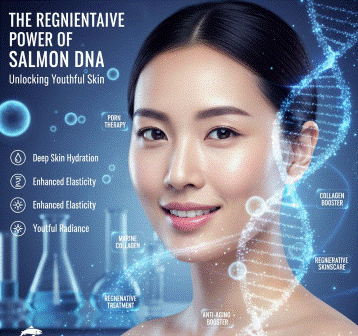
Biologically, salmon sperm is a reproductive fluid produced by male fish, known as milt. In its raw form, it contains spermatozoa and various proteins, lipids, and other cellular materials. However, in cosmetic and medical applications, usage of the whole sperm does not occur. Instead, the active component involves DNA fragments, otherwise known as poly nucleotides, which are extracted carefully in order to remove impurities and proteins. Such poly nucleotides are biologically active molecules capable of influencing skin cells once delivered appropriately. They are usually applied either topically in serums or facial treatments, or intra dermally through microinjections targeting the dermal layer of the skin. Microinjections often go hand in hand with microneedling, a procedure creating tiny channels in the skin, letting DNA fragments reach deeper and stimulate cellular repair at deeper structural levels.
The primary target of PDRN therapy is the fibroblast, a skin cell responsible for the production of collagen and elastin. Collagen gives firmness and structural support, while elastin gives skin its resilience. With increasing age, fibroblast activity decreases and, as a result, leads to wrinkles, fine lines, sagging, and dullness. PDRN acts by stimulating fibroblasts through the delivery of poly nucleotides into the dermis, increasing collagen synthesis, and enhancing tissue regeneration. Furthermore, PDRN is thought to stimulate angiogenesis, or the formation of new blood vessels, which promotes better circulation and delivery of nutrients to skin cells. It is believed to reduce inflammation, decrease oxidative stress, and generally promote healthy skin. This has a cumulative effect of giving a fresh look, smooth texture, better hydration, and elasticity that contributes to healthier, more youthful looking skin.
Scientific research backs up the possibilities of PDRN therapy. In preclinical studies, poly nucleotides derived from salmon sperm have been found to activate cellular pathways connected with the process of tissue regeneration. In vitro studies also reveal increased proliferation and migration of fibroblasts, suggesting that skin cells respond well upon the presence of DNA fragments. Human in vivo studies report skin elasticity, hydration, and thickness improvements with regular PDRN treatments. Other studies also note that PDRN may reduce pigmentation and support a brighter complexion by down regulating pathways responsible for melanin production. Such findings reveal that injections of salmon sperm are much more than just cosmetic filling; they actually work their way into enhancing the skin’s natural regenerative processes, hence conferring benefits beyond mere temporary plumping.
Complementary to PDRN therapy, marine derived ingredients like fish collagen support skin health. Collagen acquired from fish skin, such as tilapia or salmon, possesses a high degree of compatibility with human skin because of the structural similarities between both. Medical research has used fish collagen in wound healing, burns, and tissue repair, demonstrating faster recovery with enhanced regeneration. When incorporated into cosmetics, marine collagen enhances skin hydration, elasticity, and overall texture. It interacts synergistically with PDRN by strengthening the skin’s structural and functional integrity. Nowadays, most aesthetic clinics combine these two ingredients for treatments that boast deep repair yet are visibly obvious on the surface.
Administration of PDRN therapy with salmon sperm may vary from one clinic to another and depends on the treatment effect desired. Some patients are treated with topical serums applied after micro needling, when DNA fragments can penetrate deeper into the skin. Others receive injections whereby PDRN is introduced directly into the dermis in fine micro droplets. One course of treatment generally consists of several sessions, usually two to four weeks apart, with periodic maintenance treatments afterwards, to maintain the effect. Unlike traditional fillers or botulinum toxin injections, PDRN does not just create temporary volume; it encourages the skin to regenerate itself over time, and consistent treatment is necessary to achieve visible results.
Besides all the benefits, there is also some potential risk for PDRN therapy. Mild side effects may include some redness, swelling, or bruising of the injected areas, but it generally subsides after a few days. Contraindications to the treatment include fish allergies, as DNA from salmons can elicit allergic reactions. Approvals vary around the world, with topical PDRN products being allowed in many places and injectable formulations considered off label in some or without full regulatory clearance. Ensuring that the treatments are performed by licensed professionals using high quality purified products will minimize the risks. Finally, long term safety data remains limited, and the longevity of results may vary depending on age, skin condition, and lifestyle.
Another factor is the cost of the treatment of salmon sperm PDRN therapy. The treatments are usually more costly than ordinary facials or topical skin care and thus may not be within the budget of all patients. Multiple sessions are needed for the best effect, and with time, this can increase the overall expense. However, many patients who commit to the treatment report noticeable improvements in skin texture, elasticity, and hydration, which can make it well worth the investment for people looking to try a science based, non invasive rejuvenation method. Smoother skin, less pronounced fine lines, and a healthier glow are common focuses of user testimonials, although results are often gradual and require patience.
Though the idea of using fish DNA sounds strange, it is an idea based on real science. Fragments of salmon DNA are biologically active molecules that interact with skin cells in humans to repair them and regenerate them, rather than just a cosmetic, superficial effect. For some dermatologists, PDRN therapy is considered a regenerative modality, which simply capitalizes on the body’s natural ability to restore lost or damaged tissue. But calling it a miracle may be going overboard because results may sometimes vary from one person to another, and the treatment works best in conjunction with good skincare, sun protection, and generally health conscious practices. PDRN therapy should be viewed as a long term skin maintenance strategy rather than a quick fix.
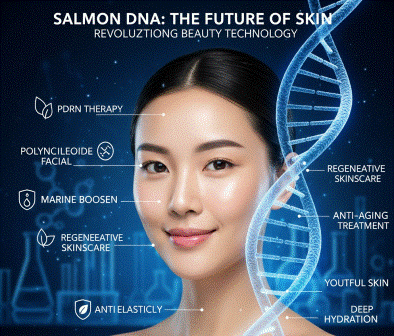
Ethical and environmental concerns also merit consideration. PDRN’s source is marine based and thus needs to be compatible with sustainability concerns in avoiding overharvesting or ecological disruptions. Several clinics and manufacturing companies have developed responsible sourcing protocols; however, as demand increases, sustainability will play a prime role in the mass utilization of salmon sperm therapies. There are other directions being researched, which involve the use of synthetic or plant based polynucleotides; however, current evidence shows that marine derived PDRNs are still most effective in stimulating the regeneration of human skin. The future of PDRN therapy using salmon sperm is bright. Current studies are directed at refining methods of delivery, dosing, and assessment for long term efficacy and safety. Clinical trials are aimed at protocol standardization that will enable dermatologists and aesthetic professionals to maximize their results while minimizing side effects. Regulatory agencies in many countries also follow closely the development of these therapies to make sure that the products meet all standards related to safety and quality. If these steps continue, PDRN could become a mainstream and accessible modality for skin rejuvenation, offering a biologically based alternative to conventional cosmetic procedures. In conclusion, salmon sperm derived polynucleotide therapy is a scientifically based, new approach to skin rejuvenation. It acts by stimulating fibroblast activity and enhancing collagen production, which has been supporting tissue repair. The advantages over temporary plumping include increased elasticity, hydration, and general skin health. This is not a magic solution, as results will require multiple sessions, commitment, and patience, and may be different in different skin conditions. Side effects are generally mild, yet allergic reactions must be considered, along with some regulatory issues. Responsible sourcing, further research, and professional administration may make PDRN therapy a powerful tool in regenerative skincare, combining advanced science with the beauty industry’s search for novelty and non invasive solutions. With the increasing interest in regenerative skincare, salmon sperm PDRN therapy has placed itself as one of the most unique and intriguing options for long term improvement in skin quality. Its application exemplifies the junction between marine biology and cosmetic technology, underlining the potential of naturally derived biomolecules in supporting human health and appearance. For people seeking a non invasive alternative to fillers or surgical procedures, this therapy offers a hope for visible, gradual improvements, enhancing the structure and aspect of the skin. Further study is required to understand the long term side effects and fine tune treatment modalities; however, the available evidence indicates that therapy with salmon sperm polynucleotide is something more than a fleeting trend. It represents an evidence based, scientifically validated alternative to skin rejuvenation that responds to the growing demand for regenerative and minimally invasive aesthetic treatments. To those willing to invest in the process and follow professional advice, salmon sperm injections can indeed be transformative they may help skin repair and regenerate over time, maintaining a fresh, glowing appearance.
About the Author