The Ultimate Guide to Online Marketing and Its Key Types
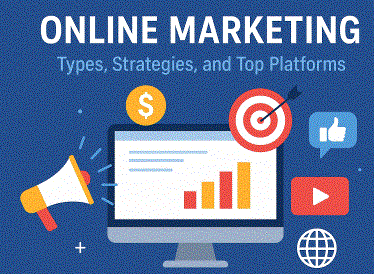
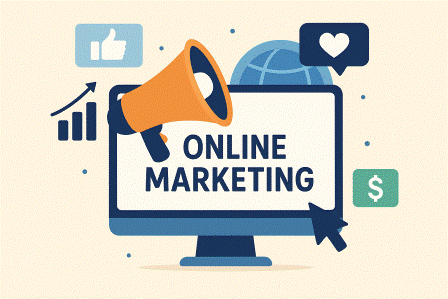
Online marketing, otherwise known as digital marketing, is the art and science behind promoting products, services, or brands utilizing the internet. It has become the core of modern business growth, enabling brands to reach a global audience efficiently and measurably. Unlike traditional marketing, online marketing gives a business the opportunity for immediate interaction with customers, real-time performance tracking, and campaign optimization for maximum return.
Be it a startup or a leading enterprise, online marketing offers endless opportunities to connect, engage, and convert prospects. Let’s consider the major types of online marketing and the top platforms powering the dynamic industry.
Search Engine Optimization (SEO)
Among the chief pillars composing digital marketing, SEO is one. In place, the visibility of websites on search engines such as Google and Bing features that are targeted. In this regard, high-content quality and relevant keywords will make the website prominently featured on the first page when users search for any subject.
SEO is divided into three main parts.
- On page SEO: Involves optimizing content, meta tags, and internal links.
- Off page SEO: Focuses on back links and authority-building.
- Technical SEO: Ensures the website is fast, mobile-friendly, and properly indexed.
A well implemented SEO strategy increases organic traffic and builds brand credibility over time. The goal is not just to rank higher, but to provide valuable content that satisfies user intent.
Search Engine Marketing
Search engine marketing, often referred to as paid search, is any advertising done through search engines. Google Ads is the most common SEM platform used. An advertiser can bid to display their ads for specific keywords, which then appear at the top of the page when users search for those terms.
SEM gives immediate or instant visibility, which is very essential for new product promotion or any type of event. Based on this, advertisers are paying per click because they will pay only if someone clicks on their ad. Combining SEM with SEO creates a strong dual approach: organic reach for long-term growth and paid ads for quick results.
Social Media Marketing
SMM is a kind of marketing that is carried out via platforms like Facebook, Instagram, X, LinkedIn, TikTok, and Pinterest to advance their brands and create communities. Each platform offers different strengths, audience demographics, and the like, so marketers can strategize in different ways.
Brands can post organic content to engage audiences or run paid ads for wider reach. For example:
- Instagram and TikTok are ideal for visual story telling.
- LinkedIn targets professionals and B2B audiences.
- Facebook offers advanced audience targeting and analytics.
It is used to engagement likes, shares, comments, and stories all help build loyalty. Partnering with influencers and using video based content further boost authenticity and visibility.
Content Marketing
Content Marketing is all about creating and distributing valuable, relevant content to attract and retain a target audience. Rather than directly promoting a brand, it educates and informs users, positioning a brand as an authoritative resource.
Examples include blogs, articles, videos, podcasts, info graphics, and eBooks. A skincare company can blog about “best skincare routines” or “natural ingredients to avoid” to attract organic traffic by way of educating your audience.
High quality content not only improves SEO rankings but also converts leads by telling a story. Consistency and value-driven information are the ingredients of successful content marketing.
Email Marketing
E-mail marketing is still one of the effective digital tools for customer engagement. It entails sending newsletters, offers, and personalized updates to subscribers. Through the use of automation tools such as Mail chimp, Hubs pot, or Convert Kit, brands can comfortably schedule, segment, and track email campaigns at ease.
Successful email campaigns include:
- Welcome emails for new subscribers
- Personalized product recommendations
- Special discounts and loyalty rewards
- Informative newsletters or blog updates
Email marketing delivers one of the highest performance because it targets people already interested in the brand. Personalization and timing are crucial for engagement and conversions of user.
Affiliate Marketing
Affiliate marketing is a strategy where affiliates promote a company’s products in exchange for a commission. Affiliates use their websites, blogs, or social media platforms to drive traffic to a brand’s online store.
Affiliate programs benefit both the brand and the marketer:
- The brand gains exposure and sales without upfront costs.
- The affiliate earns commission for successful referrals.
Influencer Marketing
Influencer marketing utilizes the reach and trust of social media personalities. Influencers, from celebrities to micro-creators, can vary in promoting products through posts, videos, or live sessions.
This is remarkably efficient because followers view influencers as somewhat ‘on their level’ and trustworthy. This campaign very much revolves around sites like Instagram, YouTube, and TikTok. Brands should select influencers whose image coincides with their message for a more natural, long-term partnership.
The best influencer marketing feels organic, not scripted. Creative freedom and transparency are major drivers of engagement and audience trust.
Video Marketing
Video marketing has exploded in popularity thanks to platforms like YouTube, TikTok, and Instagram. Video content captures attention faster and retains viewers more long than text or images. Businesses use videos marketing for:
- Product demonstrations
- Customer testimonials
- Tutorials and educational content
- Behind-the-scenes or live events
Videos to create emotional connections with audiences. Optimizing videos for SEO (using captions, keywords, and attractive thumbnails of videos) further boosts discoverability. The more authentic and valuable the video, the higher the engagement and conversion rate.
Mobile Marketing
Mobile marketing targets users through smart phones and tablets. With most internet users accessing content via mobile, it’s life line for business.
Key strategies include:
- SMS marketing for instant notifications
- Push notifications through mobile apps
- Location-based offers to target nearby users
A seamless mobile experience ensures higher conversions and lower bounce rates. Since search engines prioritize mobile friendly websites, mobile optimization also supports SEO efforts and lot more.
Display Advertising
Display advertising refers to visual banner ads that show up on websites, social media, or apps. These ads are graphically oriented to grab people’s eyeballs: images, animations, or small video snippets. The most popular tool for this would be Google Display Network and Meta Audience Network.
The most effective uses of display advertising include retargeting, wherein ads are shown to users who have previously visited your site. This gentle reminder often causes customers to complete the purchase. However, design should be aesthetically appealing and non-intrusive in order not to ruin the brand image.
Top Online Marketing Platforms
Several platforms make online marketing more efficient and scalable. Here are the most widely used.
- Google Ads: For search and display advertising.
- Facebook Ads Manager: For running social media ads on Facebook and Instagram.
- YouTube: For video-based content marketing.
- LinkedIn: For professional networking and B2B promotion.
- TikTok Ads: For creative short-form video campaigns.
- Mailchimp & Klaviyo: For email automation and list management.
- Shopify and WordPress: For building Ecommerce and content websites.
- Google Analytics: For tracking user behavior and measuring ROI.
By integrating multiple platforms, businesses can build cohesive digital marketing campaigns that reach audiences across different channels.
Now, it’s not optional to have online marketing if you want to see your business grow in this digital age. Every one of them, starting from SEO to content building, social media to influencer partnership, performs in a different way in terms of customer attraction and engagement.
Putting all these together into one digital ecosystem, where data and creativity provide fuel, will yield the best results. Trends such as AI-driven personalization, voice search, and interactive content will continue to shape the face of digital marketing as technology continues to evolve.
Ultimately, it all comes down to knowing your audience, offering real value, and earning their trust as time passes. Brands that remain authentic yet adaptable will continue to thrive in this changing digital landscape.
About the Author