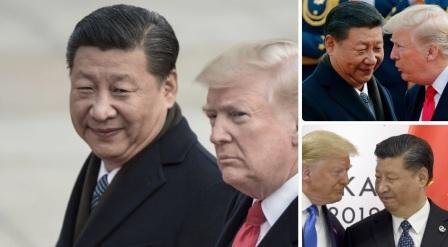
Donald Trump has signaled that he wants China to help pressure Russia into starting peace talks to end the Ukraine war a notable shift in strategy that relies less on direct U.S. action and more on third-party influence. Speaking while traveling to Asia for a meeting with Chinese President Xi Jinping, Trump acknowledged that China has significant leverage over Russia, especially as Moscow depends heavily on Chinese economic support to survive Western sanctions. His comments come after increasing frustration over the war’s lack of progress, as previous talks with Vladimir Putin have failed to produce results. In response, the U.S. under Trump has recently imposed new sanctions on major Russian oil companies but Russia continues its military operations.
This move highlights a diplomatic recalibration: instead of simply sending weapons and imposing Western sanctions, Trump is now openly inviting China to play a key role in shaping the peace process. While this could increase pressure on Russia, it also carries geopolitical risk if China becomes the primary mediator, it could gain global diplomatic influence at America’s expense. Europe and Ukraine may view this approach cautiously, given China’s history of neutrality or silent support toward Russia. The strategy also has ripple effects across Asia: countries like India and Pakistan will closely watch whether China’s role is elevated, as it could shift regional power balances. In essence, Trump’s approach reflects his longstanding style of transactional, unconventional diplomacy attempting big strategic bets rather than slow traditional negotiation and the world is now waiting to see how China responds.
About the Author