WHAT’S GOING ON
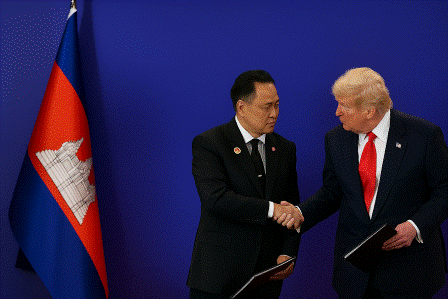
Donald Trump presided over a cease-fire deal between Thailand and Cambodia on 26 October 2025 at the Association of Southeast Asian Nations summit in Kuala Lumpur. The two countries signed a “joint declaration”, promising to withdraw heavy weapons, release detained soldiers, and deploy ASEAN observers to monitor the border. Trump framed the deal as a “historic” achievement and emphasized that the United States would tie trade and cooperation to peace in the region.
WHY IT MATTERS
The border conflict between Thailand and Cambodia had flared into serious clashes earlier this year; causing dozens of deaths and the displacement of hundreds of thousands Trump’s involvement signals a shift in U.S. policy in Southeast Asia using trade leverage and diplomatic pressure rather than purely military means. For Trump personally, this bolsters his image as an international deal-maker potentially enhancing his global diplomatic profile.
WHAT THE DEAL ACTUALLY SAYS
Thailand and Cambodia agree to withdraw heavy artillery and de-mine contested border areas. Cambodia will receive the release of 18 Cambodian soldiers detained by Thailand. Both countries commit to cooperate in border-monitoring mechanisms and avoid inflammatory rhetoric. But the agreement does not resolve the core territorial dispute over certain border land
RISKS & LIMITATIONS
Because the territorial issue remains unresolved, the truce may be fragile and could break down if either side views the other as reneging. Some analysts see the agreement as more symbolic than substantive, at least initially. The U.S. tying trade benefits to peace means Thailand and Cambodia might face new pressure, which could breed resentment if outcomes are uneven.
WHAT THIS MEANS FOR THE REGION & FOR U.S. POLICY
This effort signals the U.S. is re-engaging with Southeast Asia as a strategic region not only in security, but in trade, supply-chains and diplomacy. For Southeast Asian countries, this may mean they have greater incentive to seek U.S. partnerships if they want economic benefit and geopolitical backing. For other major powers, this signals the U.S. is still an active player in regional conflict resolution a reminder that diplomacy and trade politics are intertwined.
About the Author








Hi, this is a comment.
To get started with moderating, editing, and deleting comments, please visit the Comments screen in the dashboard.
Commenter avatars come from Gravatar.