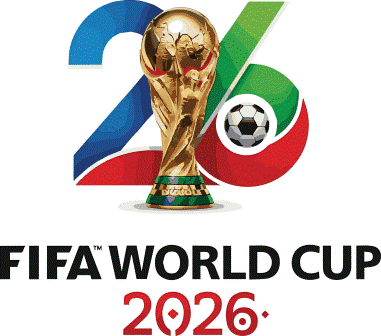
2026 FIFA World Cup Draw Announced
The football fraternity is in a buzz, as FIFA has officially announced the draw for the 2026 FIFA World Cup, jointly slated by Canada and Mexico. This new edition of football’s most coveted tournament has already stirred great excitement with the inclusion of 48 participating teams for the first time in an expanded format from the earlier 32 team competition. The expansion promises more thrilling matches, new rivalries, and an unprecedented display of football talent across the globe.
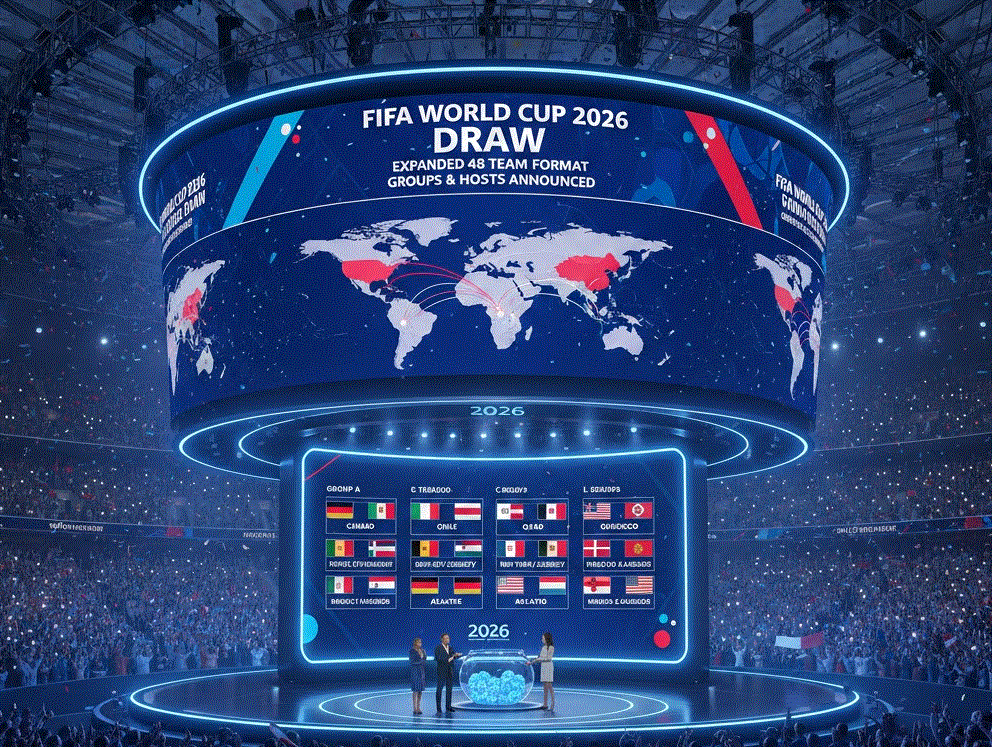
1. Expansion to 48 Teams New Era in World Cup Football
One of the most significant changes for the 2026 FIFA World Cup is the expansion from 32 to 48 teams. This is a decision taken by FIFA to give more countries from different parts of the world the opportunity to participate, thus enhancing inclusivity and providing a broader platform for emerging football nations.
1.1 Why the Expansion Matters
The expansion has multiple implications for the tournament:
- More Matches: With 48 teams, the total number of matches will increase to 80, compared to 64 in previous editions. This means more opportunities for fans to enjoy football and more chances for teams to prove themselves on the global stage.
- Global Representation: Previously, some continents, especially Africa, Asia, and Oceania, had fewer guaranteed slots. The 48 team format ensures better continental representation, allowing teams from these regions to compete against traditional football powerhouses.
- Increased Revenue: More matches, more teams, and more host cities translate to higher ticket sales, sponsorship deals, and broadcasting revenue.
However, many critics have argued that the expansion will reduce the quality of the matches, since some lower ranked teams might struggle to match up with established football giants. Despite these concerns, FIFA believes that the benefits of inclusivity outweigh the risks.
2. The 12 Group Format
The 2026 World Cup will adopt a 12 group format, each consisting of four teams. This structure is designed to balance the competition and ensure that every team has a fair chance to advance.
2.1 How the Groups Work
Each of the 12 groups will contain both seeded and unseeded teams, according to their ranking from FIFA and continental representation.
The top two teams from each group directly qualify for the Round of 32, while the remaining slots will be filled by the best third placed teams to complete a knockout stage that is sure to be full of excitement.
The new structure introduces more cross group play possibilities, leading to unexpected matchups and thrilling encounters.
2.2 Potential Group Highlights
Even with the official draw out, the fans are analyzing the potential groups of death where multiple strong teams may clash in the early stages. Historical rivalries like Brazil vs. Argentina or Germany vs. France can take place in the group stage itself due to the expanded draw, thus offering high stakes matches early on.
3. Host Countries
The next edition, in 2026, will be jointly organized with Canada and Mexico. It will be an important milestone in history, with the first World Cup with 48 teams and the first joint North American hosting since the 1994 USA World Cup, this time with three host nations being Canada, Mexico, and the United States.
3.1 Mexico
Football in Mexico has a rich tradition the country organized two World Cups, in 1970 and 1986. It is expected that the country will bring:
• Modern stadiums and facilities to accommodate large crowds.
• An enthusiastic fan base that is energizing during any match.
• Experience in the organization of international sport events, guaranteeing smooth logistics for teams and fans.
3.2 Canada: Emerging Football Hub
Canada, traditionally known for its ice hockey, is fast catching up with football craze. Hosting the World Cup will
- Present the country’s world class stadiums and infrastructure.
- Enhance the profile of football in North America to attract a new generation of Canadian players.
- Diverse cultural experiences for international visitors attending matches.
3.3 United States
While your article has mentioned Canada and Mexico, the 2026 World Cup will also be held in the United States, which is the largest market for FIFA in the world. The U.S. will:
Host the most number of matches, including the final at a stadium with a capacity over 80,000.
Leverage experience in organizing large scale sporting events such as the Super Bowl and Olympics.
4. Notable Teams and Players to Watch
The expanded 48 team format introduces fresh faces, but traditional football powerhouses will still dominate headlines.
4.1 Traditional Favorites
- Brazil: Always a contender, with a blend of youth and experienced stars.
- Germany: Tactical prowess and disciplined game play.
- France: The defending champions with a deep talent pool.
- Argentina: Led by top players, eager to reclaim glory.
4.2 Emerging Teams
- Canada: Home advantage could help them surprise top ranked teams.
- Morocco, Senegal, Japan, and South Korea: Strong teams from Africa and Asia that can upset established squads.
4.3 Players to Watch
- Kylian Mbappé (France): Speed, finishing, and experience in high pressure matches.
- Erling Haaland (Norway/if qualified): Goal scoring machine capable of dominating defenses.
- Christian Pulisic (USA): Inspiring young players in North America.
- Alphonso Davies (Canada): Speed and skill could make him a breakout star.
5. Logistics and Stadiums
The 48 team World Cup demands meticulous plan to ensure smooth operations.
5.1 Stadium Requirements
- Each host city must have stadiums with capacities exceeding 40,000 seats, with the final in a stadium of 80,000 plus.
- Facilities must include training grounds, fan zones, and security arrangements.
5.2 Travel Considerations
- Teams and fans will need to travel across three countries.
- FIFA is coordinating with airlines, hotels, and local authorities to minimize logistical challenges.
6. Economic Impact
The 2026 World Cup is expected to generate:
- Billions in revenue from ticket sales, broadcasting, and sponsorships.
- Job opportunities in hospitality, transport, and tourism sectors.
- Long term tourism growth for host cities.
7. Fan Expectations
Fans are already preparing for an unforgettable experience:
- Global attendance: Millions expected to attend matches across North America.
- Merchandising: Special editions of jerseys, flags, and memorabilia for each team.
- Cultural exchange: Fans will experience local cuisines, music, and traditions in Canada and Mexico.
8. Challenges Ahead
Despite the excitement, the 2026 World Cup faces unique challenges
- Scheduling: 48 teams mean more matches, requiring careful planning to avoid player fatigue.
- Security: Ensuring safety for players, officials, and fans across multiple countries.
- Climate: Canada’s colder regions and Mexico’s heat may affect game play.
9. The Future of Football
The 2026 FIFA World Cup represents a major milestone in football history
- Globalization of the game: More nations participating foster international competitiveness.
- Youth engagement: Inspires younger generations to play football professionally.
- Technological innovations: VAR, goal line technology, and data analytics will be used more extensively.
The 2026 FIFA World Cup could be an edition for history books, not just because of its expanded 48 team setup, but also due to the fact that there will be two joint hosts Canada and Mexico with the United States introduction of a new format 12 groups and unseen rivalries and thrilling matches could unfold.
This tournament is awaited by fans worldwide, which are ready to be amazed by upcoming stars, football legends, and unforgettable moments. With the draw now finally announced, football fans can begin to plan, analyze, and dream of the event that will shape up the future in global football and more updates.
About the Author